
Objective
This is particularly useful for debugging recording issues from Adobe Connect perspective specially in few versions prior to 9.6 where recordings only have an option to launch in flash player mode. Could be used for debugging meeting issues as well if accessed in flash player mode.
Environment
- Add new flash file: - navigate to the webpage with some flashes files - click to icon of extension Flash Player + - select on top menu 'Add flash from actual page' - click to blue icon 'add' - if you want can change flash name Play saves flashes: - click to icon of Flash Player + - select on top menu 'My Flash Playlist' - click to blue icon.
- The Shockwave player will no longer be available for download beginning October 8, 2019. Nov 21, 2018 Download Adobe Flash Player 29 Offline Installer for Windows & Mac Is Available From Official Site. Adobe best online video players and once you installed on your system, you will not face any problem to play any online videos.
- Adobe Connect Hosted/On-Premise
- Google Chrome with MAC OS client
Steps
Install the Flash Player Content Debugger
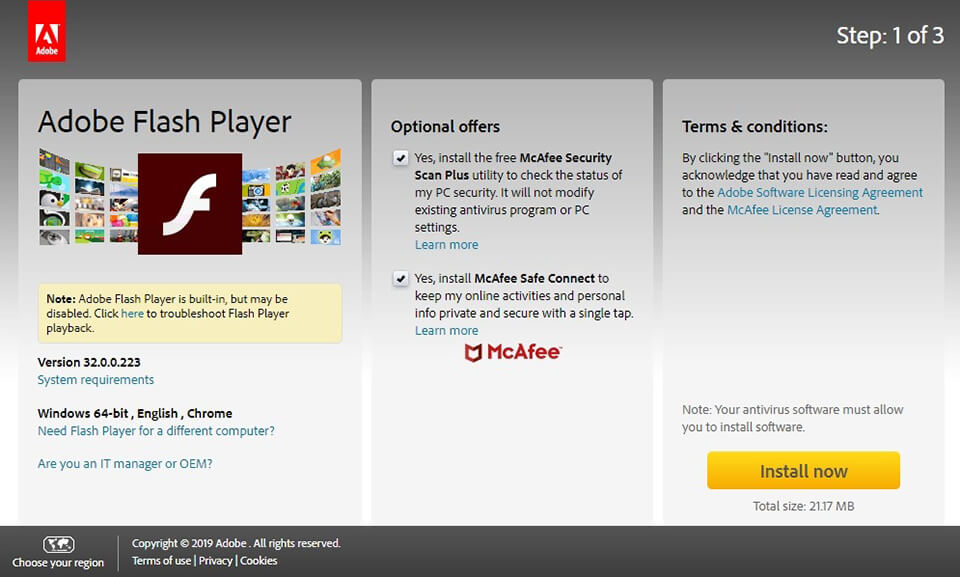
- Goto https://www.adobe.com/support/flashplayer/debug_downloads.html#fp15 and download the installer for appropriate Mac OS version
- Choose the PPAPI installer
Check the correct version is installed
In fact, this blog refers and links to Adobe's security bulletin, which provides: 'Adobe Flash Player 14.0.0.125 installed with Google Chrome will automatically be updated to the latest Google Chrome version, which will include Adobe Flash Player 14.0.0.145 for Windows, Macintosh and Linux.'

- Open http://helpx.adobe.com/flash-player.html
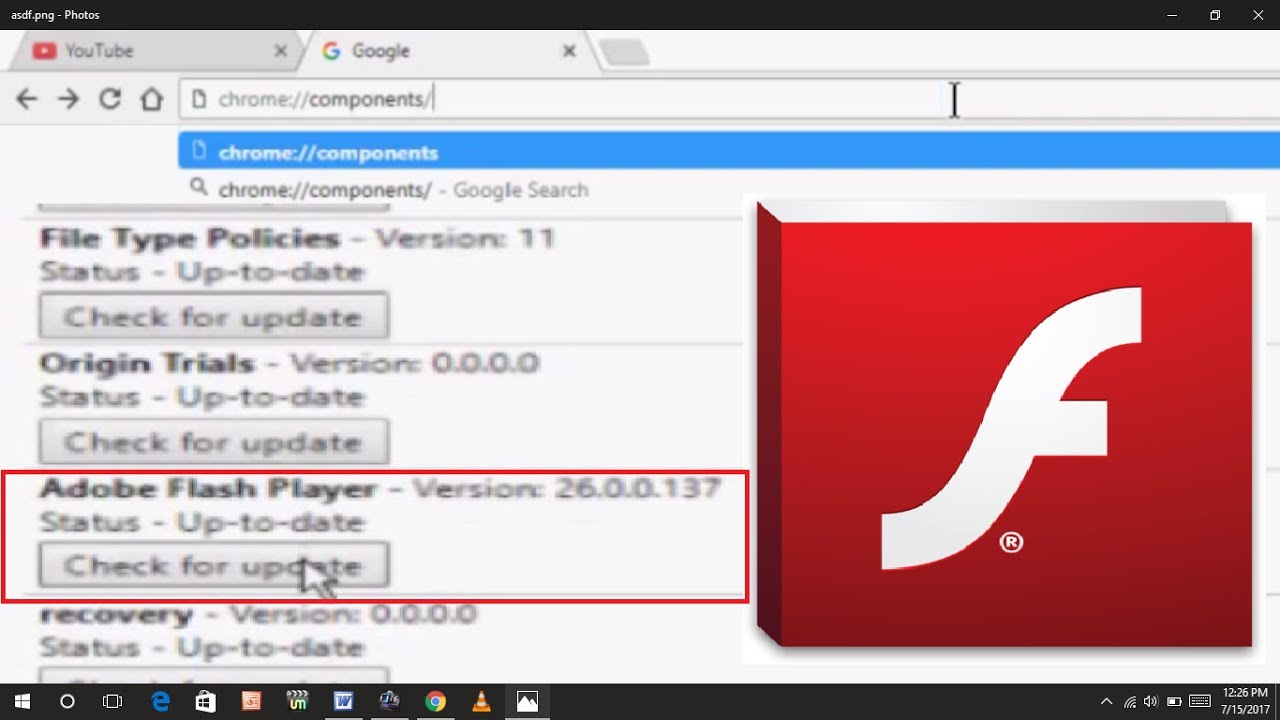
- Click Check Now, it should show the latest build installed.
- Alternately you can run chrome://version command from Chrome browser to verify the version.
Note : It might not necessarily show that debug version is installed but the key is it should show the latest we added.
Enable logging
- Create mm.cfg file from sample instructions here : https://helpx.adobe.com/flash-player/kb/configure-debugger-version-flash-player.html
- Place the file at <HOME>/Library/Application Support/Google/Chrome/Default/Pepper Data/Shockwave Flash/System/ folder.
- You might need to search the above folder location under User Library folder or System library depending upon where Chrome is installed or permissions.
- Note, if you find the correct Shockwave Flash path but you don’t see a System folder there, create it manually and copy the mm.cfg file.
- Ensure to delete any other copies of mm.cfg(mm.txt.cfg/mm.cfg.txt) file at any other location to avoid any conflicts.
Log file location
- Open a recording or meeting in flash player to verify if logs are getting created
- They should be found under : <HOME>/Library/Application Support/Google/Chrome/Default/Pepper Data/Shockwave Flash/WritableRoot/Logs/flashlog.txt
Additional Information
Additional mm.cfg properties can be added from here if needed : https://helpx.adobe.com/flash-player/kb/configure-debugger-version-flash-player.html
2019 UPDATE: Flash is no longer recommended. We offer a HTML5 Customizer (since 2016) and now only recommend that version of the MyStyle Customizer. If you are still using our Flash Customizer, we recommend disabling it in the settings and moving to HTML5-only.
Gigaware 6 ft usb a to serial cable drivers for mac. The article below is now outdated but it left here for reference in case anyone is still using a legacy version for special cases.
The settings to enable Flash are easy to set in < 30 seconds with some instructions:
Easily enable Flash in your Chrome browser settings with these steps, for all sites (Step 1-3) or for individual sites (step 1-6). Note: Settings may vary slightly depending on operating system and chrome version.
Enable Flash in Chrome On Windows or Mac
1. In the address bar, type or copy/paste this address to access your content settings:
chrome://settings/content
Tip: If that doesn’t work, try just going to your settings at chrome://settings or just click the three-dots icon for the chrome menu, and click “settings”. Then, on the main settings page, scroll down to and click “Content Settings” which is under the list titled “Privacy and Security”. If you scroll down and do not see the Privacy and Security settings list, you may need to press the small “Advanced” link at the bottom of the page to show all Chrome settings, as it may be hidden by default.
2. Click the Flash settings from the list of Content Settings.
3. Enable the switch for “Ask First”.
If you have an older version of Chrome, you may need to click the option “Allow sites to run Flash” and click “Done”.
That’s it! You have flash on now. Restart chrome and try again and you should be good to go!
If you would rather allow Flash for ONLY our customizer and not other websites, follow steps 4-6.
Allow Flash on Specific Sites by Web Address (Optional)
4. Enable flash (as per above steps) and then use the Allow section underneath to add sites to the Allow list by domain name.
5. Add [*.]ogmystyle.com in the Add a Site popup, which is our customizer app’s domain.
[*.]ogmystyle.com
Click Add to apply the permission. You can also add any other websites you would like to add Flash permission for.
6. All Set! Try it out in a new tab.
You can close the content settings screen and open a new tab to a site you’ve allowed to test your Flash support. A restart of Chrome may not be necessary with a new tab, but it’s the safest way to make sure the plugin settings are not already cached.
Block Flash by Disabling It (Same Chrome Settings)
To disable flash, simply disable the same switch for Flash support
You may also want to remove any Allowed sites that you may have added.
Background on Flash Support Changes:
Chrome Browser Now Blocking Flash – March 2017
Adobe Flash Player For Chrome Download Free
Recently, as of around March 2017, Chrome has started disabling the use of the Flash plugin even though Flash is installed by default and Chrome does support it. They don’t do a good job of explaining it on screen, at all, either, so most companies have transitioned from flash to HTML5 (not all – for example HBO GO uses Flash player for millions to watch Game of Thrones). But, without iPhone support and now Chrome defaulting to disabled, Flash is now being forced to step aside for HTML5 / Javascript.
Why Are They Doing This?
It’s a long story involving Steve Jobs / Apple, and Adobe. Long story short, Google is now leading the final charge to move towards HTML5 standards as is the new mobile-compatible standard. This is incredibly annoying for good flash apps like the Customizer! Flash now has to be manually enabled if you haven’t used it before (per website). Once they allow our customizer URL, the Flash customizer will be allowed to run on any website they use it on. (instructions below)
What Happens Exactly?
When Flash is blocked by Chrome even though it does have Flash supported, our HTML5 Customizer will run instead, as it does for all mobile users that don’t have Flash at all. Desktop users will often get the non-Flash HTML5 version in Chrome, unless they have either used it before the new Chrome settings, or if they’ve allowed Flash to run in the Chrome settings.
Flash-Only Features
Adobe Flash Player For Mac Google Chrome Downloads
As of this writing, the main features that are not yet supported on HTML5 are Patterns and Monograms. The HTML5 Customizer DOES support uploading images, adding text, backgrounds, foregrounds, fonts, drag and drop editing, and all the core features that are most important for the majority of personalization sites. Our roadmap currently includes adding support for Patterns and Monograms in Q4 unless otherwise prioritized by a custom development collaboration with a client or developer.